
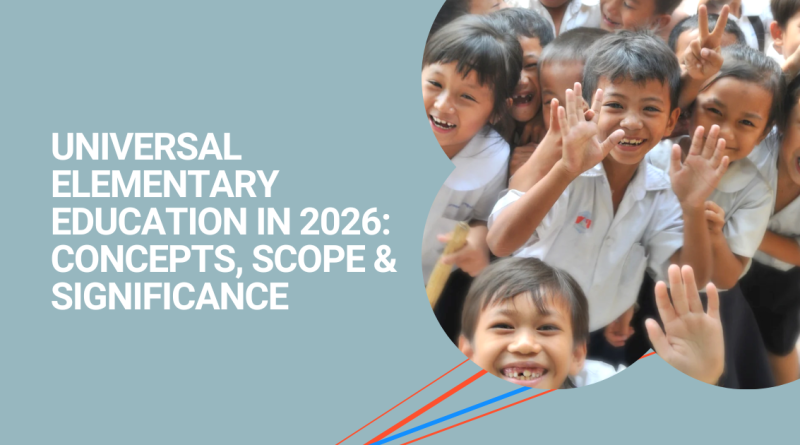
Universal Elementary Education in 2026: Concepts, Scope, and Significance
Education is a foundation for human development, economic growth and social equality. Nations need to educate their citizens for growth and prosperity. And here comes the idea of universal elementary education. The concept of this idea goes beyond simply enrolling children in schools. Basically, it reflects a commitment that ensures that every child learns, grows and develops essential life skills.
What is Universal Elementary Education?
This concept refers to the objective of providing free and compulsory education to all children, normally between the ages of 6 and 14, ensuring that every child has access to basic schooling as a fundamental right. And the idea of universalization of elementary education goes a step further as it includes the enrollment of every child in school, reducing dropouts and offering meaningful learning outcomes. Primarily, it is an insight that is aimed at transforming education from a privilege into a universal entitlement.
Key Component of Universalization of Elementary Education
Universalization of Elementary Education is not all about bringing children into schools but is more about creating an education system where access, participation, continuity and learning outcomes are all ensured. Let’s explore its core pillars:
Universal Access
It means that every child has a school within a reasonable distance, which is supported by safe and functional infrastructure. This access primarily includes classrooms, clean drinking water, sanitation facilities, and learning resources. These elements are deemed essential to make schooling possible and welcoming. And without these elements, education merely remains a theoretical concept.
Universal Enrollment
It emphasizes bringing every eligible child into the education system without any form if discrimination. It includes addressing barriers such as poverty, gender issues, disability and social inequality. Universal enrollment ensures that no child is left behind. Furthermore, it is not just about enrollment but also about extending equal educational opportunities.
Universal Retention
It focuses on ensuring that every child stays in school until they complete their elementary education. From addressing financial pressures to improving learning environments to developing supportive policies and creating engaging teaching methods, universal retention is all about strengthening the foundation of children.
Universal Achievement
It means that education must lead to meaningful learning outcomes. Students should acquire essential skills, knowledge, critical thinking abilities and practical skills to prepare themselves to address challenges ahead and contribute in a meaningful way. Basically, quality teaching, updated curricula and continuous assessment are key to realizing this objective.
Objectives of Universal Elementary Education
No doubt, it is necessary to achieve basic literacy. However, the goal of universal elementary education is not limited to teaching kids how to read and write but also producing individuals who can actively contribute to society.
- One of the primary objectives is to ensure equal educational opportunities for all children, regardless of their socio-economic background, gender or geographical location.
- It is also about equipping individuals with modern-day knowledge and skills to improve their economic prospects and also strengthen entire communities.
- This concept also lays the foundation for critical thinking, awareness and skill-based learning, preparing individuals to adapt to changing environments and make informed decisions.
- It helps people understand their rights and obligations as citizens, enabling people to actively participate in democratic processes and national development.
- Elementary education also serves as the basis for continuous learning throughout life. It basically develops curiosity, adaptability and willingness to learn beyond formal schooling.
The objectives of Universal Elementary Education directly align with the ongoing shift toward skill-based learning where focus is on both theoretical knowledge and practical application of learning.
Importance of Universal Elementary Education in the Modern World
The world is changing rapidly. Amid this, this concept is helpful in preparing people to understand this evolution and get ready for a new future.
- First of all, it lays the foundation for human capital development.
- It also supports the economic growth of a nation through a skilled workforce.
- It also reduces prevailing inequalities by extending equal learning opportunities.
- Additionally, it also prepares children for modern challenges.
Challenges in Achieving These Objectives
There are several barriers that we still need to address to achieve the objectives of universal elementary education. Hurdles include poverty and child labor, which limit school attendance, gender inequality, limited infrastructure in underprivileged areas, quality gaps, policy implementation issues, etc.
Another dimension is parental opt-out-rights in education where parents are allowed to withdraw children from certain aspects of curriculum. Though it increases parental involvement, it also brings about challenges when it comes to maintaining an inclusive education system.
Government and Policy Initiatives
Governments across the globe are working toward Universal Elementary Education through education-related laws, investment in school infrastructure, teacher training programs and digital learning programs. Further, skill-based education is also being incorporated to ensure that students are prepared for both academic and practical life challenges.
Role of Teachers and Institutions
Teachers’ role in this regard cannot be neglected. They possess multifaceted roles such as delivering quality education, developing critical thinking skills, supporting inclusive classrooms and adapting to modern teaching methods. Educational institutions, on the other hand, should also balance structured learning with flexibility to ensure a quality learning experience for students.
Future of Universal Elementary Education
The future of this phenomenon will also be shaped by several factors such as the integration of technology in classrooms, focus on skill-based learning, personalized learning experiences and also strong collaboration between parents, schools and policymakers.
Conclusion:
Universal Elementary Education is considered a transforming factor. It has the potential to foster the growth and prosperity of societies and also strengthen democratic systems through informed decision-making, eliminating prejudice and bringing about equality and progress. This phenomenon seems revolutionary. However, the true success lies in achieving universalization of elementary education where access to education, quality and outcomes are equally prioritized.